Tuesday, November 8, 2022

SUPRA SEGMENTAL FEATURES


                                             SUPRA SEGMENTAL FEATURES


             A Supra- segmental or prosodic feature is a vocal effect that extends over more than one sound segment (vowel and consonant) in an utterance, such as stress pitch, intonation or juncture pattern. Stress is the emphasis or loudness with which syllables are produced and pitch is the high or low quality of the voice caused by the rate of vibration of the vocal cords. The pitch of the voice rises and falls during an utterances, creating a melody or intonation contour. Juncture is the transition or mode of transition from one sound to another in speech to phonetics; juncture is the set of features in speech that enable a hearer to detect a word or phrase boundary (e.g. distinguishing I scream from ice cream.)

  • STRESS- Stress means greater articulatory effort. The word of English are made up of one or more than one syllable depending on the length of a word. Each syllable is a product of one chest pulse or breath force. When a particular syllable is produced with a strong breath force, it is considered to be stressed. Thus stress is that characteristics of sound which is realized when a particular syllable is articulated with a strong breath force. The content words that give the main idea of sentence are stressed whereas the function/ structure words which are required to perform grammatical function in a sentence are not stressed.

Two types of stress can be established:-

  • Word Stress (or accent)

  • Phrasal (or sentence )

WORD STRESS-  in words made up of more than one syllable, some syllable stands out from others. In a word like Fable it is the first syllable that receives “stress” or more articulatory energy which results in its ‘sounding louder and longer than the other syllable’ the second syllable here. The distribution of stress over the word fable can be shown in this manner fa-ble.

In monosyllabic words- these words may contain more than one phoneme, but that doesn’t matter stress falls on the only syllable they contain:

I   /ai/     (single phoneme word)

See  /si:/  (two phoneme word)

Cat /kaet/  (three phoneme word)

Flame /fleim/ (four phoneme word)

Tract /traekt/ (five phoneme word)

PHRASAL STRESS-   Words have more or less fixed stress in connected speech, the intonational and contextual imperatives guide a speaker’s choice of stress. Longer utterances, clauses and segments can show changes in stress pattern. This is accompanied by the rise and fall in the pitch level. For example sentence like-

Bring those chair closer

Different words can be stressed in the manner shown in below-

Bring    those    chairs    closer.

Bring    those    chairs    closer.

Each of the above examples conveys a different meaning. Normally content words receive the primary stress, grammatical words do not. As  T.  Balasubramanian says, ‘the choice of the syllable receiving accent depends on the meaning the speaker wants to convey’.

Stress features are thus divided into the following levels;-

  1. Primary Stress.

  2. Secondary Stress.

  3. Tertiary Stress or Weak Stress.

1)-PRIMARY STRESS-  Primary Stress is strongest degree of stress placed on a syllable in the pronounciation or word.  Primary stress is represented by the half straight bar [  ` ]. Primary stress is syllable.  For example- `apple, `father.

2)-SECONDARY STRESS-   The stress is a word which is weaker than a primary stress is know as secondary stress. The [  ‘  ]  is used to indicate the strongest degree of stress. For example- Educate {ediu’keit}.

The word understand carries a primary and a secondary stress indicated as { under ‘ stand}.

3)-TERTIARY STRESS OR  WEAK- tertiary stress is weaker than secondary stress and close to weak or unmarked stress. It is somewhat to difficult to define and describe it.

  • RHYTHM- Rhythm is a musical quality of speech that intends to create a soothing impression on the mind of the listeners. The English language is marked with this rhythmic quality which is realized when we take into account the certain technicalities involved in it. We saw that content words are stressed and function words are unstressed in connected speech. Content words are stressed to make the meaning of sentence very clear. Look at this sentence- ‘Playes have ‘gone to’ Delhi. Here all the content words are stressed, marked with vertical bars, and structure/ function words- ‘have’ and ‘to’ are not stressed. These stressed and unstressed syllables together constitute rhythm units. Let us divide the stressed and unstressed syllables into such units which are also called foot.

As English is a stress- timed language, during the articulation of each of these units almost equal time should be taken by a speaker. This characteristics of English language gives it rhythm. The concept of rhythm is associated with time factor. Each of these feet is called rhythm unit or stress group.

  • INTONATION- Another significant supra segmental feature of English language is intonation or variation of pitch from one segment of an utterance to another. A lot of emotional meaning is conveyed by consciously varying intonation level. During the production of speed sounds, the vibration of vocal cords is a common phenomenon. The degree of vibration depends on the frequency with which vocal cords open and close per second. This relationship between frequency and vibration is directly proportional i.e more frequency results into more vibration. In continuous speech its frequency always keeps on changing. The rate of change of this frequency is called pitch. This change of pitch results into rise and fall of pitch movement is from low to high, it causes rising tone. When the pitch movement is from high to low, it causes falling tone. In some cases, it falls first and then rises and vice versa producing a falling- rising and rising falling tone respectively. Look at these sentences.

My father is a teacher  (falling tone)

Are you going?  (rising tone)

I come here sometimes (falling rising tone)

Is he sure it will work? (rising falling tone)

The mark (`) indicates falling tone, the mark (,) indicates rising tone, the mark  (ˇ) indicates falling rising tone and the mark(ˆ) indicates rising falling tone.

Intonation as a phonological feature is used to serve some important functions in utterances. It helps in making the meaning of utterances clear by showing the emphasis of the speakers on specific words having tonic syllables. It largely indicates the mood and attitude of the speakers, as a rising tone in wh-question usually show the friendly gesture. It performs grammatical functions also. For instance, a statement with rising tone changes a declarative sentence into interrogative. Look at these sentences- 

My friend is a teacher. (Declarative)

Mt friend is a teacher. (Interrogative)

Here, the first sentence is declarative simply because there is falling tone on the word “teacher”. The second sentence becomes interrogative due to rising tone on the same word where the speaker wants to be sure whether his friend is a teacher. Thus intonation plays a very important role in English sentences.

  • JUNCTURE- Juncture is that concept related to continuous speech in which the lack of recognizable pause between two words or syllables results into the complete difference in meaning of the expressions. Look at these groups of words-

I  scream     ( Ice Cream)

A name       (an aim)

That stuff    ( that’s tough)

In appropriate situations (inappropriate situations)

When these expressions are uttered without giving the required degree of pause between them, there is immense possibility of loss of communication. The expressions given in the brackets may replace the intended expressions leading to complete communication failure. The feature connected speech is studied under the heading juncture.

To sum up it is difficult to imagine human communication without these features. They invariably accompany our speech and lend the additional dimension on which is more immediately and directly understood. These features convey the speaker’s identity attitudes, emotional states and her evaluation of how she/he is being received.

Thursday, August 29, 2019

NISSIM EZEKIEL life and works

INTRDOCUTION
The Indo - Anglian poetry is said to be essen-tially Indian and everything
else afterwards. It expre-sses the essence of Indian personality and is also very
sensitive to the changes of its national climate and it voices the aspirations and
the joys and sorrows of Indians.
It has been opined, that the Indo - Anglian poets are of two factions. The
neo-modernists and the neo-symbolists. The outlook of the former is coloured
by humanism and irony and that of the latter is imbued with mysticism and
sublimity, but a perfect blend is achieved by the two groups in the realms of
beauty. A perfect example, of anlndo - Anglian poet, who was able to arrive at
a synthesis between the two factions of poetry, is none other than Sarojini
Naidu, for she took her stance in the neutral, middle ground, between the
sacred and profane sphere of poetry4 she was at home in both the worlds and
found them united in the realms of poetry.
Its possible to gain a proper perspective of the development of Indian
feminine poetic tradition, only if it is considered with reference to the
chang-ing position of women in India. The very term Women poets implies an
attempt to isolate women poets from men poets, and consider them in a group
only on the basis of sex, some critics have wondered as to whether there is anything like feminine sensibility, feminine experiences and feminine ways of
expression. The feminine character is made up of certain psychological traits
as well as certain socially conditioned ones.
All these features set them apart as a group. They moreover do not
accept the duties which are tradi-tionally allotted to women, in the male
dominated society, and assert their new identity as independent, individualistic
and conscious participants in experience. Thus these women poets do mark'
the evolution of the Indian feminine Psyche from the tradition to modernity.
Nissim Ezekiel occupies an important place in post-Independence Indian
English literature. He has wielded a great influence as a leading poet, editor
and an occasional playwright. Besides, he is a well-known critic. Sometimes he
also emerges as a politician in the guise of a fighter for cultural freedom in
India. Ezekiel held many important positions. He was for many years a
Professor of English in Bombay University. He is a noted name in the field of
journalism. In this capacity he was editor of many journals including Poetry
India (1966-67), Quest (1955-57) and Imprint (1961-70), He was an Associate
Editor to the Indian P.E.N., Bombay.
1.2 LIFE AND WORKS OF NISSIM EZEKIEL
As a man of letters Nissim Ezekiel is a 'Protean' figure. His
achievements as a poet and playwright are considerable. K. Balachandran
writes, "The post-Independence Indian poetry saw its new poetry in the fifties.
Among the new poets A.K. Ramanujan, R. Parthasarathy, Shiv K. Kumar,
Kamala Das, Monica Verma, O.P. Bhatnagar, Gauri Deshpande, Adil
Jussawalla, Ezekiel occupies a prominent place. His versatile genius can be
found in his poetry, plays, criticism, journalism and translation."
Nissim Ezekiel has done a good work in Indian writing in English. He
has written many volumes of poems—A Time to Change (1952), Sixty Poems
(1953), The Third (1959), The Unfinished Man (1960), The Exact Name (1965)
and others. His plays Nalini, Marriage Poem, The Sleep-Walkers, Songs of
Deprivation and Who Needs No Introduction are already staged and published.
He has also edited books Indian Writers in Conference (1964), Writing in India
(1965), An Emerson Reader (1965), A Martin Luther King Reader (1965) and
Arthur Miller's All My Sons (1972). His literary essays published in magazines
and papers are innumerable. The notable among them are 'Ideas and Modern
Poetry' (1964), 'The Knowledge of Dead Secrets' (1965), 'Poetry as Knowledge'
(1972), 'Sri Aurobindo on Poetry' (1972), 'Should Poetry be Read to Audience?'
(1972), 'K.N. Daruwalla' (1972), 'Poetry and Philosophy,' 'Hindu Society'
(1966). He has written essays on art criticism 'Modern Art in India' (1970),
'How Good is Sabavala?' (1973), and 'Paintings of the Year 1973' (1973). His
essays on social criticism Thoreau and Gandhi' (1971), 'Censorship and the
Writer' (1963), 'How Normal is Normality' (1972), 'Tradition and All That a
Case Against the Hippies' (1973), 'A Question of Sanity' (1972) and 'Our
Academic Community' (1968) are varied and auto telic of his wide interest. Ezekiel is an editor of several journals encouraging writing poetry,
plays and criticisrm He also asked many writers for translation, affecting the
theory and practice of the young poets. The writers like Rilke and W.B. Yeats
influenced Ezekiel. Like Yeats, he treated poetry as the 'record of the mind's
growth.' His poetic bulk indicates his growth as a poet-critic and shows his
personal importance.
Chetan Karnani states, "At the centre was that sincere devoted mind that
wanted to discover itself. In the process, he managed to forge a unique
achievement of his own."
The poet Ezekiel has already published several volumes of poems. A
Time to Change (1952) was his first book of poems. For him poetry-writing
was a lofty vocation, a way of life. He treated life as a journey where poesy
would be the main source of discovering and organising one's own self. In a
sense, poetry to Ezekiel became a way for self-realisation. He calls life a
texture of poetry. He identifies himself with poetry. So all of his volumes of
verse are well-knit and they are in the poet's view, a continuation of each other.
Ezekiel's experiments in prose rhythms and his fine sense of structure and
metrical ability. The verse rhythms of T.S. Eliot seem to haunt his mind.
Ezekiel's Sixty Poems (1953), his second volume of poems was published in
1953. But these poems are loose in structure and they are less appealing.

critical analysis the poem NIGHT OF THE SCORPION

NIGHT OF THE SCORPION
‘Night of the Scorpion', in which Ezekiel recalls the behaviour of 'the
peasants', his father, his mother and a holy man when his mother was poisoned
by a scorpion's sting. Here the aim is to find poetry in ordinary reality as
observed, known, felt, experienced rather than as the intellect thinks it should
be. While the peasants pray and speak of incarnations, his father, 'sceptic,
rationalist', tries 'every curse and blessing, powder, mixture, herb and hybrid'
and a holy man performs a rite. After a day the poison is no longer felt and, in a
final irony, his mother, in contrast to the previous feverish activity centred
upon her, makes a typical motherly comment:
My mother only said
Thank God the scorpion picked on me
and spared my children.
The 'Thank God' is doubly ironic as it is a commonplace expression of speech
in contrast to all the previous religious and superstitious activity. Ezekiel's
purpose is not, however, an expression of scepticism but rather the exact
notation of what he saw as a child. The aim is not to explain but to make real
by naming, by saying 'common things'. The poem is a new direction, a vision
of ordinary reality, especially of Indian life, unmediated by cold intellect. The
new purpose is seen in the poem's style, unrhymed, with line lengths shaped by
natural syntactical units and rhythm created by the cadences of the speaking
voice into a long verse paragraph, rather than the stanzaic structure used in
earlier poems.
In his poetry there is the truth of acknowledging what is felt and
experienced in its complexity, contradictions, pleasures, fears and
disillusionments without preconceived ideas of what poetry should say about
the poet and life.
Nissim Ezekiel’s ‘Night of The Scorpion’ is much appreciated by the
critics and it has found place in many anthologies for as excellence, Critics,
commenting on its aesthetic beauty expressed different views. In their critical
sweep, they brought everything from superstitious ritualism to modern
rationalism. One can find that in the poem superstitious ritualism or sceptic
rationalism or even the balance of the both with expression of Indian ethos
through maternal love in the Indian way, is nothing but scratching the surface.
The poem has something more gigantic than its face value, which as I find is
the symbolic juxtaposition of the forces of darkness and light that is
intrinsically centripetal in the poem.
It is ‘Night’ of The Scorpion’ with the first word absorbing accent. It
seems to have been implicitly contrived here that ‘Night should stand as a
symbol of darkness with the ‘Scorpion’ as the symbol of evil. Such ingenuity
in craftsmanship takes the poem to the higher level of understanding. Prof.
Birje Patil is right in putting that in “Night of The Scorpion”, where evil is
symbolized by the scorpion, The reader made to participate in the ritual as well
as suffering through’ a vivid evocation of the poison moving in the mother’s
blood’. And evil has always been associated with darkness, the seamy side of
our life, in human psyche. It has always been the integral part of theology, in
whatever form it has manifested that suffering helps in removing that darker
patch in human mind, he patch that has been a besetting sin of man’s
existence.
May the sum of evil
Balanced in this unreal world
against the sum of good
become diminished by your pain, they said
These lines amply testify that the poem aims at achieving something
higher than its narrative simplicity. The choric refrain ‘they said’ in the chain
of reactions made by the village peasants is undoubtedly ironic, but the poet
hasn’t as much to stress the concept of sin, redemption or rebirth as he has to
insinuate the indomitable force of darkness gripping the minds of the
unenlightened. Going through the poem attentively more than once, it can’t fail
catching our notice that modern rationalism is also equally shallow and
perverse. It is also a road leading to confusion where through emerges
scepticism, the other darker patch on our modernized existence. The image of
the father in this poem speaks volumes for this capsizing modernism which sandwiches in its arm- space the primitive and the perverted. The “sceptic
rationalist’ father trying ‘powder, mixture, herb and hybrid’ bears upon human
primitivism and when he experiments with ‘a little paraffin upon a bitten toe
and put a match to it he becomes a symbol of perversion in the modern man’s
psyche.
Christopher Wiseman puts it, “...a fascinating tension between personal
crisis and mocking social observation”” ; neither there is any personal crisis.
On the other hand there is spiritual compassion and an intense urge for getting
rid of this psychological syndrome that the whole modern world has been
caught, the slow-moving poison of this syndromic scorpion into the very veins
of creation, the image of the mother in agony nullifying the clear vision of
human thought and enveloping the whole of humanity In the darker shades of
confusion more chaolic, troubles the poet as much sharply as the sting of the
poisonous worm. There is crisis, but it is the crisis of human existence that
needs lo be overcome. The poet, though a distant observer, doesn’t take a
stance of detachment. On the exact opposite, he watches with curiosity “the
flame feeding on my mother’, but being uncertain whether the paraffin flame
would cleanse her of the ugony of the absorbing poison, he loses himself in a
thoughtful trance.
The whole poem abounds with these two symbols of darkness and light.
In the very beginning the poet has ushered in this symbolic juxta position and
then as the poem advanced, built upon it the whole structure of his fascinating
architecture in the lines. Ten hours of steady rain had driven him to crawl
beneath a sack of rice parting with his poison - flash of diabolic tail in the dark
room he risked the rain again.
The incessant rain stands for the hope and regeneration where with is
juxtaposed the destructive hurdles to fruitfy that hope. But the constructive, life
giving rain continuoues and the evil, having fulfilled its parts, departs. Then
afterwards other hurdels more preying than the first, come in. More candles,
more lanterns, more neighbours more insects, and the endless rain My mother
twisted through and through groaning on a mat.
The symbols of light and darkness, candles lanterns, neighbours and
insects and rain again are notworthy. But the force of light gains a width
handover the evil force and life is restored once again in its joyous stride and
this life long struggle between forces of darkness and light reaches a crescendo
when - after twenty hours It lost its sting. Here, In the above lines, lies the
beuaty of the poem, when the ascending steps of darkness, being chased by the
force of following light are ripped down; when at last on the peak the chaser
wins and the chased slips down.
The man who has not understood what motherhood is. might be taken in
by such expression of motherly love. But I convincingly feel that any woman
would have exclaimed the same thing as the mother in this poem did. In my
view, it would have been truly Indian had the mother in her tortures remembered her children and though helplessly, had she desired to protect
them lest the scorpion might catch them unawres. Anyway, the beauty of the
poem remains- unmarred by such revision. The poem is a thing of beauty par
excellence.
The poem "Night of the Scorpion" can be classified as poetry of situation - an
art in which Browning and Robert Frost excelled. It presents a critical situation
in which a mother is bitten by a scorpion. It involves a typical Indian Situation
in which an entire village community identifies itself with a sad domestic
happening. It pictures the traditional Indian society steeped in ignorance and
superstition.
The poem is set against the backdrop of Indian rural setting. The rural habit of
Storing rice in gunny bags is referred to in the phrase, " a sack of rice".
The rural practice of building huts with mud walks is captured in the phrase
"mud backed walks". The absence of rural electrification in Indian villages
before independence is hinted at in a string of images, "dark room" and "
Candles and linters". "Darkness" has the extended meaning of Indian villages
being steeped in ignorance.
The situation of a scoipion-stung mother is encountered in different ways of
prayer, incantation and science.
Not one stays at home when the peasants hear of a mother bitten by a scoipion.
They rush buzzing the name of God times without number. With candles and
lanterns, they search for him. He is not found. They sit on the floor with the
mother in the centre and try to comfort her with words of philosophy. Their
prayer brings out their genuine concern for the suffering mother. The father,
through a skeptic and a rationalist, does not differ in the least from the ignorant
peasants. He tries both medicine and "mantra" drugs and chants as seen in the
phrase "trying every were and blessing". A holy man is brought to tame the
poison with an incantation.
It is the belief of the village community that buzzing " the name of God a
hundred times" will bring about relief to the mother stung by the scorpion. The
action of the rural folk brings out their firm faith in God and in the efficiency of
prayer. It is the belief of the rural community that the faster the scorpion
moves, the faster the poison in the mother's blood will move. In equating the
movement of the scorpion and that of the poison in the blood stream, the
peasant betray their superstition.
The peasants sit around the mother groaning in pain and they try to console her
offering remedial advice of a strong ritualistic and faith - healing kind. Some
peasants say that as she has suffered now, in the rent birth she will experience
less troubles. She will now be in a balanced state whereby her body is ridden of device and her spirit of ambition. The incantatory utterances made
by the peasants smack of their belief in the Hindu law of "Karina", in the Hindu
doctrine of rebirth and in the 13 Hindu concept of the world as one of illusion
and the physical suffering bringing about spiritual rejuvenation.
The poem is remembered particularly for its 'memorable close' - me last three
lines:
My Mother only said
Thank God the scorpion picked on me
And spared my childred.
The use of the restricted adverb 'only' distinguishes the mother from the
peasants, the father and the holy man. The, other does not blame God but she
thanks God because the scorpion stung her and spared her children. Her agony
would have been greater if any of her children were bitten. Ultimately, it
assumes universal dimensions. The poet throws light on the selfless lore of the
Indian mother.

Tuesday, August 20, 2019

To help Hindi UPSC aspirants, RSS wants to scrap aptitude test & change interview system

To help Hindi UPSC aspirants, RSS wants to scrap aptitude test & change interview system


RSS has suggested that interviews in the civil service examination be replaced by a psychological test, along the lines of one held by the Army.

KRITIKA SHARMA and SANYA DHINGRA

20 August, 2019 8:15 am


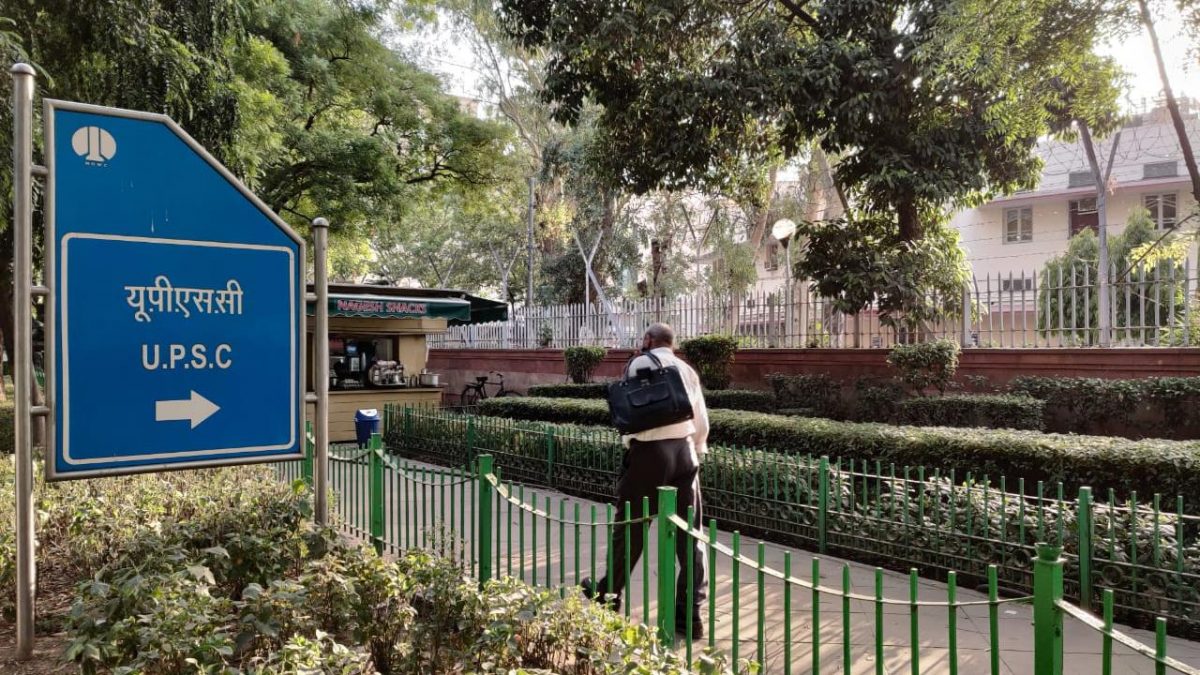
The Union Public Service Commission (UPSC) headquarters in New Delhi | Photo: Manisha Mondal | ThePrint
New Delhi: The Rashtriya Swayamsewak Sangh (RSS) has urged the Modi government to do away with the Civil Services Aptitude Test (CSAT) and replace the interview with a psychological test, along the lines of one held by the Army, for the Civil Services Examination conducted by the Union Public Service Commission (UPSC).
The Sangh claims that the CSAT disadvantages those who write the exam in Hindi and alleges that the interviews are not uniform.
Doing away with both is among the suggestions that a committee formed by the RSS on competitive exams has given to the government during a deliberation that took place in the national capital over the weekend.

The event was attended by important stakeholders from the service commissions and members of the UPSC and the government. RSS chief Mohan Bhagwat, along with other senior functionaries of the organisation, was a part of the event.
“We work on the philosophy that the exam pattern should be reformed in such way that it provides equal opportunities to people and there should be no discrimination,” said Devendra Singh, national convener, competitive exams, for the RSS affiliated Shiksha Sanskriti Utthan Nyas.
“We have been working on improving the competitive exam pattern for the last five years now. Currently, exams are conducted in a way that they do not cater to the specific requirements of the job,” he added.
The RSS stance on CSAT is in line with what the UPSC has been proposing. In a letter to the central government earlier this year, the UPSC had also recommended doing away with the controversial auxiliary exam.

‘Hindi medium aspirants at a disadvantage’

According to the RSS, 90 per cent of those who qualify the CSAT are from an English medium background and so it does not do justice as a qualifying exam.

Advertisement